            | Rotator Cuff Tendon TearSymptoms of an Acute Supraspinatus TearIf a tear or rupture in a rotator cuff tendon occurs during a traumatic incident you may experience the following symptoms.
Symptoms of Chronic Supraspinatus TearIf a tear or rupture in your rotator cuff tendon occurs over time you may experience the following symptoms. 
Supraspinatus Tendon Tear Risk FactorsRepetitive overhead movements without properly warming up (lifting object overhead for work, chopping wood, swinging a hammer, participating in sports such as volleyball, baseball, tennis and rowing) can cause the supraspinatus tendon to weaken over time making it more prone to a tear, tear, and rupture.  Because supraspinatus tendon injuries are often a result of overuse, people over 40 are at greater risk of degeneration and rotator cuff tears due to the body's natural weakening of the soft tissue over time. Slouching your neck and shoulders forward can also cause excess stress on your supraspinatus tendon because the space for your tendon between the bones in your shoulder become smaller. This can lead to rotator cuff tendons becoming pinched by the bones in your shoulder. Lack of strength to support the glenohumeral joint of your rotator cuff leads to a greater risk of incorrect movements. This can cause wear and tear on a tendon and weakening over time. Supraspinatus Tendon Surgical RepairsMost people will respond to a combination of therapies with guidance from their health care professional. Things like rest, physical therapy, cold compression, therapeutic ultrasound, and Circulation Boost can treat most injuries to the rotator cuff tendons. However, surgery is required in the case of a complete tear and some partial tears to attach the tendon back to the bone or other part of the tendon it detached from. Surgery for other rotator cuff tendon injuries may be performed when all other options have been exhausted. Risks of any type of shoulder surgery include nerve injury, infection, and stiffness. 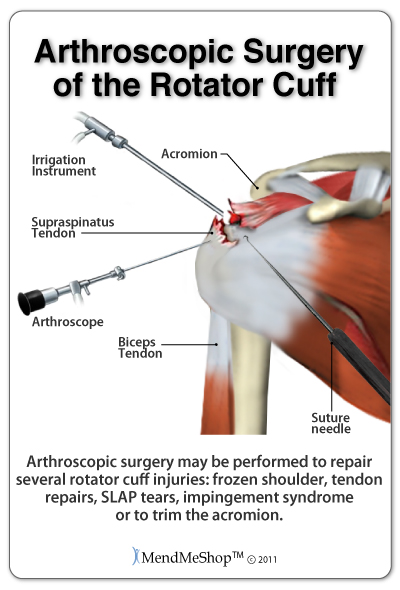 Arthroscopic rotator cuff repairs are a popular way of treating rotator cuff tears however, not all tears can be treated by this method. A number of small incisions are made and a small camera (arthroscope) is inserted to view the tear and surrounding tissue. The repair is done through other tiny incisions with the surgeon using the arthroscope to see the torn tendon on a television monitor as they complete the repair. Mini-open rotator cuff repair (called the "mini-open method") uses a combination of an arthroscope to see the torn tendon and a 1 inch incision over the affected area to repair the tendon. This allows the surgeon to see if there is other damaged tissue or bone spurs that need to be removed. Shoulder replacement surgery is done when a large tear in the rotator cuff results in the cartilage of the shoulder joint has degraded due to neglect over time. This condition is called rotator cuff arthropathy, and is essentially shoulder arthritis and a large rotator cuff tear combined. A standard shoulder replacement is usually not adequate to repair rotator cuff arthropathy, and requires special implants so that the rotator cuff can function somewhat normally after surgery. Following shoulder or rotator cuff surgery, physical therapy is very important because the shoulder will not likely recover without proper rehabilitation. The purpose of physical therapy after shoulder surgery is to strengthen the muscles, but to protect the tendons at the same time. Although sometimes painful, completing rehabilitation after any kind of shoulder surgery is essential to gain proper muscle function and prevent the onset of frozen shoulder. Rotator Cuff tear Treatments - What You Can Do!Most partial supraspinatus tears can be treated with non invasive therapies such as Circulation Boost (using the TShellz Wrap®). Surgery is usually performed in the case of complete ruptures so the torn tendon can be reattached to the bone or other part of the tendon it was torn away from. The trick to healing your rotator cuff tear, improving your range of motion, and getting your shoulder back in the best possible condition you can is getting it to heal with minimal scar tissue. this is an area where Circulatory Boost can help! Even with optimum healing, there is always less elasticity in previously injured rotator cuff tendons. However, if you heal your tear properly and treat scar tissue build up, your chance of re-injury or chronic shoulder conditions later on is much lower than average. Furthermore, as shown on the main page, Circulatory Boost has been proven to increase elasticity in tendons, ligaments and muscles which will aid in increasing the range of joint motion which will also help your chances of avoiding a more chronic injury level. There are healing tools that can help treat your rotator cuff tendon/muscle tear and speed up the healing process so you can get back to a life without pain and risk of further injury. Home treatments with a Shoulder TShellz Wrap® will help minimize scar tissue growth and promote blood flow to heal your tendon faster and more completely than any other methods available. Cold TherapyTo decrease inflammation and relieve the pain of a rotator cuff tear doctor's recommend cold compression. For an acute tear, cold compression within the first 48 - 72 hours and after re-injury is important to limit the amount of damage done to your tissue. Cold compression will relieve pain and swelling as needed and will reduce, or even eliminate, the need for NSAIDs. Once the inflammation of your rotator cuff tear has been reduced, nourishing and strengthening the tendon tissue and surrounding area is recommended. Using Circulation Boost will speed your recovery and heal your rotator cuff more completely preparing it for strengthening exercises. Talk to your doctor or physical therapist to find out which exercises are appropriate for your situation. The TShellz Wrap® - Circulation BoostAfter severe inflammation and swelling is reduced you can really start to work on increasing blood flow to your rotator cuff through the use of a shoulder TShellz Wrap®. The TShellz Wrap® increases the amount of blood that flows naturally to tissue in your shoulder to nourish the area and help maximize the ability of the body to work on healing tissue. 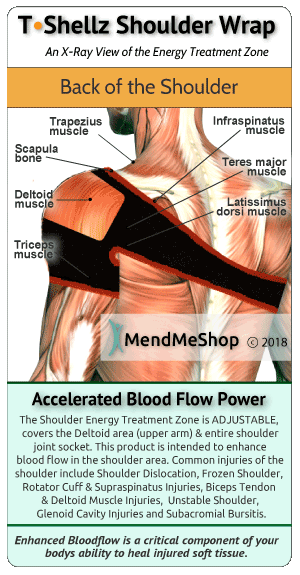 The rotator cuff naturally receives a limited blood supply and when you stop moving your shoulder because it hurts the blood flow is reduced even further, limiting your body's natural ability to heal itself. By treating your rotator cuff with Circulatory Boost you can increase your body's blood supply to the shoulder and increase your body's natural healing power. A Shoulder TShellz Wrap® is the tool you need to treat your sore shoulder because it speeds healing and relaxes the surrounding muscles, tendons and ligaments. Through a process we call Circulation Boost, soft tissue in the shoulder are safely and gently stimulated. Your body responds with a rapid increase in blood flow to the area, increasing the supply of oxygen and nutrients to injured tissue to promote healing. Our Shoulder TShellz Wrap® provides effective, non-invasive, non-addictive pain relief and healing with no side effects. Enhanced blood flow from a TShellz Wrap® treatment whisks away dead tissue and toxins that have built up from your damaged rotator cuff. When you stop moving your arm and shoulder due to shoulder pain, your muscles and other tissue can become weaker and dead tissue and toxins in the area can cause further tissue deterioration - this can lead to atrophy. By clearing the area of toxins and increasing the amount of oxygen and nutrients to your muscle and other tissue, the risk of atrophy (muscle weakness and/or deterioration) is greatly reduced. Keeping your upper arm, shoulder and rotator cuff tissue as healthy as possible throughout the healing process will allow you to improve shoulder strength again once your pain has gone and your tear has healed. Not only does the incorporation of conservative treatments (such as the use of a Cold Compress or Ice Pack and the Shoulder TShellz Wrap®) make up a valuable component of your everyday home recovery plan, but it helps to prevent long term complications. Chronic pain, lack of mobility, or arthritis in the shoulder are some of the more common long term complications that can occur when rotator cuff tears go untreated. By treating your rotator cuff with the Shoulder TShellz Wrap®, joint elasticity increases, scar tissue growth is minimized and the labrum and other tissue becomes stronger reducing the risk of chronic problems in the future. During the healing process, scar tissue will build at the location of the tear. In addition, scar tissue will bind muscles, ligaments and other tissue together in the injury area. This inflexible scar tissue limits the movement of these connective tissues that were once elastic making movements painful and essentially reducing your shoulders' range of motion over time. As a result, movement of the entire joint is limited making it difficult to lift your arm or to reach for objects. If left untreated, the shoulder may 'freeze' (a condition called frozen shoulder or adhesive capsulitis) altogether making movement impossible. At the very least, scar tissue leaves your shoulder joint weaker, leaving your shoulder and rotator cuff at greater risk of further injury - this is why we urge people to incorporate the Shoulder TShellz Wrap® into their treatments! It is really an essential tool for rehabilitation and prevention of chronic (long term) injury and joint atrophy. We recommend that you consult your doctor and/or physiotherapist before using any of our outstanding products, to make sure they're right for you and your condition. During your recovery, you may have to modify and/or eliminate any activities that cause pain or discomfort in your rotator cuff area until your pain and inflammation settle, and you gain more mobility and strength in your shoulder. The more diligent you are with your treatment and rehabilitation, the faster you will see successful results! Click HERE to Go To Our Online Store We take all major credit cards and Paypal. Product specialists are available 9:00 am to 5:00 pm Eastern Standard Time Monday to Friday. If any question or concern arises, call us or simply send us an email at any time (we check our emails constantly all throughout the day and night.. even on holidays!). We will respond as soon as possible. North America Toll Free 1-866-237-9608 |
     |