

Dear MendMeShop,

Hello, When I purchased your unit it was for relief of an injured rotator cuff. The unit gave me great temporary relief but the pain kept coming back. I finally consented to an MRI on 9-2-09 and it found I had a good sized tear in the rotator cuff. Surgery followed on 9-16-09 and I'm in physical therapy now at our local hospital. I told my therapist that I have an Ultrasound unit at home and asked about using it in addition to the PT. She was surprised that I had one and asked to see it. The other day I brought the unit to my therapy session. After showing it to the staff she told me the consesus was that I had a "pretty cool thing" and to continue using it as recommend by you folks. Jim P.

Rating: Five Star Rating

Jim Patten


Dear MendMeShop,

I have been suffering from a torn rotator cuff for 4 months. I have been seeing a professional physiotherapist for three of these months who said this injury will take about a year to heal. I decided to try a friend's therapy kit for use between visits, hoping for lots but not expecting much. I was truly amazed! I experienced as much healing in 3 weeks after using your products as I did in the first 3 months of therapy alone. I rarely feel the pain anymore and am able to use my arm normally. What an amazing difference! I have my own kit now and should hopefully be done treating my shoulder within another few weeks. I can't believe the difference!

Rating: Five Star Rating

Sarah Williams


More Rotator Cuff Facts:

The rotator cuff is a shallow 'ball-and-socket' joint where the humerus (upper arm) meets the scapula (shoulder blade).


2-5% of the population will experience Adhesive Capsulitis (Frozen Shoulder), most for no apparent reason.


Women and diabetics are common sufferers of Frozen Shoulder.


Ultrasound Therapy can greatly reduce the time it takes to move through the 3 stages of Frozen Shoulder.


Rotator cuff tears occur most frequently in men, ages 40-50, who do manual overhead work.


The most common tendon torn in the rotator cuff is the supraspinatus tendon.


A complete tear of the supraspinatus tendon will limit your ability to lift your arm at your side (abduct).


Ultrasound Therapy can improve the range of motion in the shoulder joint as it reduces pain.


Dear MendMeShop,

I have adhesive capsulitus and supraspinata calcification. I was advised by the specialist to rest the joint and let it heal itself with little to no recommendation re exercise (say 6/12/18 months!!!). After seeing an osteopath and researching the internet I saw your site re ultrasound and asked my physio his opinion. He loaned me a commercial unit and after three days treatment (three times per day) with exercise in the shower my inflammation was reduced and range of movement radically increased. Hence the order from Mendmeshop and I have used the Ultrasound unit since receipt. I am now back at golf with no pain from the golf swing and virtually full range of motion of the arm. Have also used to radically reduce soft tissue soreness around the ankle bone and knee hence I am very pleased with the Mendmeshop Ultrasound unit and the service provided by Mendmeshop prior to purchase. I bought two and I am taking the second unit across the country for my sons Xmas present as he has used Ultrasound to help with back problems.

Rating: Five Star Rating

Paul Lea


Dear MendMeShop,

Hello, When I purchased your unit it was for relief of an injured rotator cuff. The unit gave me great temporary relief but the pain kept coming back. I finally consented to an MRI on 9-2-09 and it found I had a good sized tear in the rotator cuff. Surgery followed on 9-16-09 and I'm in physical therapy now at our local hospital. I told my therapist that I have an Ultrasound unit at home and asked about using it in addition to the PT. She was surprised that I had one and asked to see it. The other day I brought the unit to my therapy session. After showing it to the staff she told me the consesus was that I had a "pretty cool thing" and to continue using it as recommend by you folks. Jim P.

Rating: Five Star Rating

Jim Patten


Our Experienced Shoulder Specialists are Friendly and Very Helpful.


Shoulder Instability and Dislocation

Shoulder instability is a condition where the soft tissues that hold the humeral head (top of the upper arm bone, the humerus) against the glenoid cavity (at the glenohumeral or shoulder joint) in place, are no longer able to. As a result, the humerus is allowed to slide around (called subluxation), or in some cases, come right out of the socket, often referred to as 'popping' out of the socket or dislocation.

Anatomy of the Glenohumeral Joint

The many joints, ligaments, tendons, labrum, and muscles of the shoulder allow for an incredible range of motion. However, due to the wide range of motion and flexibility, the shoulder is also very unstable. The glenohumeral joint is a ball and socket joint similar to the hip, but the ball doesn't sit in the socket as deep. The humeral head sits against the glenoid cavity more like a golf ball on a tee. This means the shoulder relies on the soft tissue in the shoulder socket to hold it in place.

Shoulder instability often results from an injury to the glenohumeral joint.

The ligaments in the shoulder that are largely responsible for stability are called the coracohumeral ligament, the superior glenohumeral ligament, the medial glenohumeral ligaments, and the inferior glenohumeral ligament. There are also ligaments within the shoulder joint capsule that help to stabilize the glenohumeral joint. The joint capsule is a watertight sac that contains fluid to lubricate the joint. The walls of this joint capsule are ligaments that attach to the humeral head, restricting the distance the humeral head can come out of the capsule.

The muscles and tendons of the rotator cuff that support the glenohumeral joint include the supraspinatus, the infraspinatus, the teres minor, and the subscapularis. The tendons create a 'cuff' at the outer edge of the shoulder and surround the glenoid cavity and humerus for stability. The tendons attach the muscles to the bones in the arm and shoulder, allowing movement when the muscles contract.

Shoulder Instability

If any of these supportive muscles, tendons, and/or ligaments become fatigued, weakened, injured or overstretched, the head of the humerus can slip out of the glenoid cavity easily making the shoulder unstable.

Damage to the ligaments, tendons, and/or muscles in the shoulder from a past accident or a fall can often lead to subluxation (joint sliding around) happening from seemingly unrelated activities. This is often referred to as post traumatic instability. When this occurs, shoulder instability can become a chronic problem with the shoulder popping out of place on a regular basis.

At times, dislocation of the glenohumeral joint may occur. It is often hard for people to get the shoulder back into place on their own, and this can mean a painful trip to the emergency room every time the shoulder pops. Dislocations can cause nerve damage within the shoulder joint and can be very painful.

Dislocation in the shoulder can happen in a particular direction or in more than one direction. The injury is usually classified based on the direction the humeral head moves out of the joint:

  • Anterior - humeral head is driven forward, below the coracoid process.
  • Posterior - humeral head is driven backward.
  • Inferior - humeral head is pushed down below the glenoid cavity.
  • Multidirectional - more than one direction.

Anterior dislocation is the most common of these classifications, making up approximately 90-95% of all shoulder dislocation injuries. Regardless of the direction of dislocation, the ligaments, labrum, and other connective tissue that holds the humerus in the shoulder joint become stretched and can no longer hold it close causing instability.

What are the Symptoms of Shoulder Instability?

  • Pain in the shoulder.
  • A loose feeling, like the shoulder will slip out of its socket.
  • Subluxation, the shoulder actually slipping around in the joint when the hand is raised about the head.
  • Frequent dislocation.
  • If nerves are stretched, you may feel numbness just below the shoulder on the outside of the arm or numbness along the length of the arm (known as dead arm syndrome).
  • A Bankart tear, a tear in the labrum and the lower glenohumeral ligament, may follow an anterior shoulder dislocation. 3/4 of all Barkart tears are also accompanied by a Hill-Sach's lesion, a compression fracture to the humeral head.

Causes of Shoulder Instability

  • A shoulder dislocation injury that has damaged the tendons, ligaments and/or muscles in the shoulder.
  • Hypermobility, known as general joint laxity or double jointedness, where connective tissue in the body can stretch farther than normal.
  • Weakness of the muscles in the shoulder from overuse.
  • Conditions that have symptoms of hypermobility, including pregnancy.
  • Gradual stretching out of the joint capsule, common among athletes who do overhead motions repeatedly (throwing objects etc.).
  • Bearing weight overhead repeatedly.

Treating Shoulder Instability - What You Can Do!

If you suffer from shoulder instability, rest is recommended. However, some careful shoulder movement is required to prevent the joint from freezing and losing range of motion. See your doctor or physical therapist for stretches that will not cause further injury to your rotator cuff. Avoid activities that cause pain or may have caused the injury and begin cold compression treatments as soon as possible.

Scar tissue develops as damaged rotator cuff tissue heals. This can lead to re-injury or other painful conditions if left untreated.

The trick to healing your shoulder instability is getting the connective tissue surrounding the glenohumeral joint back to normal. The ligaments and tendons that have been stretched can heal and stabilize your shoulder again and you want them to heal as close to the healthy, elastic tissue they once were so you have the same flexibility and range of motion in your shoulder that you have always had. Healing with minimal scar tissue is the only way to do this - something ultrasound therapy is great at! Even with optimum healing, there is always less elasticity in previously injured rotator cuff tendons, muscles and ligaments. However, if you heal your unstable shoulder properly and treat scar tissue build up, your chance of re-injury, chronic instability or other shoulder conditions later on is much lower than average.

There are healing tools that can help treat your rotator cuff tendons, labrum, and coracohumeral and glenohumeral ligaments to speed up the healing process so you can get back to a life faster, without pain and risk of further injury. Therapeutic Ultrasound and Blood Flow Stimulation Therapy (BFST®) will treat scar tissue and promote blood flow to heal your glenohumeral joint faster and more completely than any other methods available.

MendMeShop® Success Stories

Although steroid injections may provide temporary relief from the pain of shoulder instability they should generally be avoided as they weaken tissue and may lead to a complete rupture. If you do opt for an injection, doctors usually recommend that you do not participate in strenuous activities for several weeks to reduce the risk of a rupture.

Freezie Wrap® Cold Compression Therapy

To decrease inflammation and relieve the pain of shoulder instability doctor's recommend cold compression therapy. Following a fall or other acute injury that caused the shoulder instability and after any re-injury, cold compression therapy within the first 48 - 72 hours is important to limit the amount of damage done to your tissue. Cold compression therapy will relieve pain and swelling as needed and will reduce, or even eliminate, the need for NSAIDs.

The Shoulder Freezie Wrap® treats pain, swelling and inflammation caused by shoulder instability while reducing tissue damage.

The Shoulder Freezie Wrap® is the cold compression tool you need to treat your rotator cuff tendons, labrum, and coracohumeral and glenohumeral ligaments in an effective and convenient way.

Cold Compression Therapy works by interrupting and slowing nerve and cell function in the injured area and reducing swelling that can block blood vessels. This is important because once blood vessels are blocked or damaged, they can no longer carry oxygenated blood through your tendons and ligaments and tissue cells begin to break-down. Without cold compression therapy cellular break-down and tissue damage continues as the cells do not get the oxygen they need to survive. By limiting the amount of damage done to your tissue, you also limit the amount of healing that needs to occur. This is a very important step to heal your shoulder instability faster and with less pain!

Click here to visit our online store

The deep cooling effect provided by the Shoulder Freezie Wrap® slows cell metabolism thereby reducing cellular break-down and tissue damage. Furthermore, because the cold wraps gently numb the nerves, the wraps also reduce pain!

The Shoulder Freezie Wrap® uses a supercharged cooling gel pack, that chills in the fridge, not in the freezer like ice or other freezer packs, giving you deep cold therapy without the risk of 'cold burns' or cryoburn. The medical-grade wrap keeps the cold directly off your skin preventing cryoburn while delivering cold right where you need it.

Click here to learn more about Cold Compression Freezie Wraps®

Ultrasound Therapy

Ultrasound therapy is a great therapeutic option to decrease inflammation, pain and soft tissue damage that occurs with a fall or injury causing shoulder instability. Therapeutic ultrasonic waves increase tissue elasticity while increasing blood flow to your injured rotator cuff tendons and liagments surrounding the humerus head. This cleans the injured area by getting rid of damaged tissue and reducing the inflammation while opening up the blood vessels to begin healing.

MendMeShop Therapeutic Ultrasound treats rotator cuff tendon and ligament injuries and reduces inflammation and scar tissue

Not only does ultrasound aid in the duration of healing, but it helps to prevent long term complications. Pain, lack of mobility, tendinosis, or arthritis in the shoulder are some of the more common long term complications that can occur when shoulder instability go untreated. By treating your rotator cuff with ultrasound, scar tissue becomes softer and the connective tissue becomes stronger reducing the risk of chronic problems in the future.

During the healing process, scar tissue builds around the rotator cuff and within the glenoid cavity. This scar tissue can cause the tendons to thicken, decreasing the area in the subacromial space and increasing the chance of impingement.

In addition, scar tissue can also bind the tendons and ligaments together within the joint capsule and surrounding the rotator cuff. The inflexible scar tissue limits the movement of these tendons and ligaments that were once elastic and allowed the shoulder its large range of motion. As a result, movement of the entire joint is limited making it difficult to lift your arm or to reach for objects. If left untreated, the shoulder may 'freeze' (a condition called frozen shoulder or adhesive capsulitis) altogether making movement impossible. At the very least, scar tissue leaves your tendons and ligaments weaker, making your rotator cuff at greater risk of further deterioration and possible tearing.

Click here to visit our online store

Fortunately, you can treat your stretched rotator cuff tendons and coracohumeral and glenohumeral ligaments with MendMeShop Ultrasound to soften scar tissue and improve the motion and flexibility of your shoulder.

Ultrasound can also be used to administer therapeutic medicines into the body. This is a process known as phonophoresis. Ultrasound with phonophoresis is rapidly becoming more popular than ultrasound therapy alone.

Lavender Infusion Ultrasound Gel contains the healing power of natural Bulgarian lavender, eucalyptus, menthol, and peppermint.

MendMeShop® ultrasound therapy with phonophoresis is safe, easy, and convenient and generally requires between 10-15 minutes per treatment. It is based on a form of deep tissue therapy, which is generated through high frequency sound waves (that we can not hear). These waves send micro vibrations into your body and carry medicated molecules within the ultrasound gel deep into your soft tissue to enhance the ultrasound therapy, resulting in even healthier tissue. Ultrasound waves penetrate deep to relax your muscles, decrease inflammation and accelerate your recovery rate, so you can return to your daily activities as soon as possible.

Using MendMeShop Lavender Infusion Ultrasound Gel during your ultrasound therapy gives you 2 therapies in 1. You get the benefit of the regenerating sound waves from the ultrasound device itself AND the added bonus of the therapeutic ingredients inside the gel being delivered into the tissue where it is most effective. 1 FREE bottle of MendMeShop® Lavender Infusion Ultrasound Gel comes with every MendMeShop® Ultrasound Therapy System and it contains the therapeutic essential oils of natural Bulgarian lavender, peppermint, eucalyptus, and menthol.

Click here to learn more about Ultrasound Therapy

MendMeShop® Success Stories

Once the inflammation of your shoulder joint injury has been reduced, nourishing and strengthening the tendon and ligament tissue and surrounding area is recommended. Using Blood Flow Stimulation Therapy will speed your recovery and heal your rotator cuff and glenohumeral joint more completely preparing it for strengthening exercises. Talk to your doctor or physical therapist to find out which exercises are appropriate for your situation.

Inferno Wrap® Blood Flow Stimulation Therapy

After severe inflammation and swelling is reduced you can begin to treat your glenohumeral joint tendons and ligaments with Blood Flow Stimulation Therapy (BFST®). BFST® increases the amount of blood that flows naturally to your shoulder to nourish your soft tissue to speed healing.

The Shoulder Inferno Wrap speeds the healing of rotator cuff tendon and ligaments injuries.

The rotator cuff naturally receives a limited blood supply and when you stop moving your shoulder because it hurts the blood flow is reduced even further, limiting your body's natural ability to heal itself.
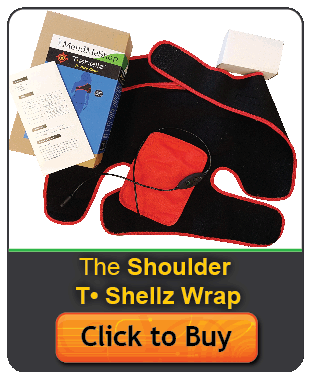
By treating your rotator cuff with BFST® you can increase your body's blood supply to the shoulder and increase your body's natural healing power.

An Inferno Wrap® is the tool you need to treat your sore shoulder because it speeds healing and relaxes the surrounding muscles. With BFST®, tissues are safely and gently stimulated. Your body responds with a rapid increase in blood flow to the area, increasing the supply of oxygen and nutrients to injured tissue cells to promote healing. Our Shoulder Inferno Wrap® provides effective, non-invasive, non-addictive pain relief and healing with no side effects.

In addition, the improved blood flow whisks away dead cells and toxins that have built up from your injury. When you stop moving your arm and shoulder due to shoulder pain, your muscles and other tissue can become weaker and dead cells and toxins in the area can cause further tissue deterioration - this can lead to atrophy (muscle weakness and/or deterioration). By clearing the area of toxins and increasing the amount of oxygen and nutrients to your muscle and other tissue, the risk of atrophy is greatly reduced. Keeping your upper arm, shoulder and rotator cuff tissue as healthy as possible throughout the healing process will allow you to improve shoulder strength again once your pain has gone and your rotator cuff tendons and coracohumeral and glenohumeral ligaments have healed.

Click here to learn more about how BFST® and Inferno Wraps® work.

Click here to visit our online store

With these 3 easy therapies, cold compression, ultrasound and BFST®, you will notice significantly reduced pain and an incredible improvement in your rotator cuff range of motion.

We recommend that you consult your doctor and/or physiotherapist before using any of our outstanding products, to make sure they're right for you and your condition.

During your recovery, you may have to modify and/or eliminate any activities that cause pain or discomfort in your rotator cuff area until your pain and inflammation settle, and you gain more mobility and strength in your shoulder. The more diligent you are with your treatment and rehabilitation, the faster you will see successful results!

Surgical Repair for Shoulder Instability

The most common surgery for stabilizing the shoulder is called a Bankart repair. It is commonly performed arthroscopically through several small incisions around the shoulder joint. Several tiny incision are made for the arthroscope (a pencil sized-camera) to view the damage in the joint capsule from different angles. The surgeon will remove any bone spurs or degenerative tissue and then reattach any torn ligaments to the glenoid cavity. This is usually done with special 'suture anchors' that hold the ligaments in place and will dissolve over time as the tissue heals.

Another type of surgery that is used to stabilize the shoulder is called a capsular shift. This procedure is used when the shoulder capsule itself is too large, which causes instability in many directions for the patient. The joint capsule being too large may be referred to as a redundant or patulous joint capsule. The joint capsule must be tightened in order to make it more stable. A capsular shift can be done with arthroscopy as well. The surgeon will connect a flap of the tissue in the joint capsule to another part of a joint capsule, creating a pleat-like structure.

Recovery time for surgery will depend on a number of different factors including your healing ability, diet, rest and how many procedures were done during surgery. Your doctor will advise you on your recovery and let you know if/when physical therapy can be started.

Rotator Cuff Injury Facts:

The term "rotator cuff" refers to a group of four tendons that attach four shoulder muscles to the upper arm bone.


About 6 million people in the U.S. seek medical care each year for shoulder problems.


The shoulder joint has the widest range of motion of all joints in the body.


Ultrasound Therapy can speed rotator cuff injury recovery significantly.


Continual repetitive use of the injured rotator cuff will lead to a worse injury.


Although the rotator cuff can tear suddenly as a result of a serious injury, most rotator cuff problems develop over time.


Dear MendMeShop,

I didn't know Frozen Shoulder existed until my doctor diagnosed it 3 months ago. Then I kept hearing about friends brothers, parents, and friends of friends etc who had it and I was surprised at how common it is. Most of these people were plagued with it for months and months. I suffered for 1 month then ordered a wrap and ultrasound kit from your store. Once I started using them, I just kept getting better. After 3 weeks I thought my shoulder had more motion and less stiffness than it had had in many years. I'm better than ever now. Thanks for a great product, Jeff

Rating: Five Star Rating

Jeff Smith


Dear MendMeShop,

I am a RNA (12 years now) who suffered a neck / shoulder strain injury about 6 months ago. Much of my work involves heavy lifting of patients that are unable to assist themselves, and I can attest that eventually the strain catches up with you. I was advised by one of our doctors to visit MendMeShop.com and I am thrilled to say that this company really wanted to help! I've never ordered online before, so I called the customer service line and order the ultrasound unit with extra gel. After about 1 week of my husband treating my shoulder and back, I found that I am finally getting a good night sleep and I'm no longer worried that I'll have to take a medical leave. I want to thank you for not only helping me, but also giving me the ability to continue my career. Sharon R. Seattle, WA

Rating: Five Star Rating

Sharon R.


Specialized Rotator Cuff Customer Service Advisor can help you with product selection.

Dear MendMeShop,

I spent 7 years in the gym walking one hour and working out. I lost 85 pounds in about 2 years with a lot of hard work and dedication. After I left the gym in 2008 due to it closing I started having problems about a year later. I recently had surgery on my left shoulder on Jan 4th of this year to shave down the bone to leave enough space for my shoulder joint to work. It seemed to be healing slowly, until I probably reinjured it trying to cut down a small tree. I went back to my Orthopedic Surgeon for my follow up and had to have a cortizone shot in June so I could be painfree while on a long awaited vacation. The shot lasted until September and had another shot October 26 with a warning from the Dr that if I couldn't get any better through therapy by Jan 6 2011 I would have to have the full surgery with my tendons and muscles sewn up to the top of my Rotator Cuff. I told him I don't want to go through the pain again, since I can't take pain medication due to my daily med I have to take for PTSD and can't take them both at the same time. So I did some research for the last 2 months and kept coming up with the MendMeShop Left Shoulder Inferno Wrap. I printed all the material and showed it to my OS and he said to try it if I think it will help me. I received it in 2 days last Friday and was out of town overnight.So I didn't get to try it until Saturday night. I tried it wrapped over a sweater with a thermal shirt underneath and the heat went right through and felt like I was at the physical therapist. The next day I did a few 60 minute sessions and I could feel my muscles ache a little bit, but NO PAIN praise God !!! I was buying a large tube of Extra Strength Muscle Rub with 16 % Menthol once a week to bear the pain along with 800 ML of Ibuprofen.Today is Thursday and I haven't had to put any rub on my shoulder since coming home Saturday night. This Inferno Wrap is incredible and is worth every penny. I am on Disability so I can't afford to waste a penny, but this purchase is becoming a lifesaver for me. Sometimes I just unplug from the charger, tuck the little 8 inch connector, then I tighten the wrap to make it a compression support and the heat stays in it for hours and allows me to be able to function a lot less painful since I am left handed also. If I could give it a 10 star rating instead of a 5 star I would. I will keep you all up to date a few times a week as I progress, along with any replies I might receive. Sun Nov 14, 2010 2:51 pm

Rating: Five Star Rating

Rajendra Singh


pain relief and injury treatment with ultrasound therapy

Inferno Wrap Shoulder - an advanced treatment for shoulder injury and rotator cuff injury

Freezie Wrap Shoulder - efficient relief of swelling and pain from an active sprain, shoulder strain, whiplash, or tight upper back muscles

Inferno Wrap Arm for treatment of the forearm, biceps, triceps, and median and ulnar nerves

Freezie Wrap Arm for cold compression of the forearm, biceps, triceps, and median and ulnar nerves

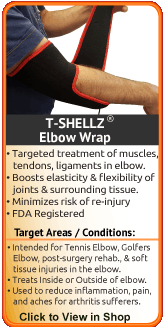
Inferno Wrap Elbow for tennis elbow, epicondylitis, elbow strains and elbow sprain

Freezie Wrap Elbow for tennis elbow, epicondylitis, and elbow sprain to prevent surgery

TortoiseShellz Premium Upper Back Vest - relief for your sore upper back and neck pain due to overuse, strain and injury.

Contact one of our Mendmeshop Customer Service Advisors for any questions help with ordering and recommended treatment directions