Dear MendMeShop,

I am using the ultrasound mostly 3 times a day. I occasionally can only get in 2 times a day due to the traveling at present. I think I have had good results, it has helped a constant pain go away, unfortunately I continue to have occassions where I move a certain way and my shoulder is in pain. This causes a set back. At present these pain times are less severe and I'm having fewer of these occurances. I rest my arm as much as possible. I bought an AC adapter for use in the car while on the road. All the walking I've done over the past 6 days has caused a knot to reappear in the arch of my foot from a previous injury to a tendon sheath. I've used the ultrasound on it and it helps it go down and has greatly eased the pain, since I'm still needing to walk. The ultrasound has been a blessing for me and I'm sure will continue to do so.

Rating: Five Star Rating

Vonda Clerke


More Rotator Cuff Facts:

The rotator cuff is a shallow 'ball-and-socket' joint where the humerus (upper arm) meets the scapula (shoulder blade).


2-5% of the population will experience Adhesive Capsulitis (Frozen Shoulder), most for no apparent reason.


Women and diabetics are common sufferers of Frozen Shoulder.


Ultrasound Therapy can greatly reduce the time it takes to move through the 3 stages of Frozen Shoulder.


Rotator cuff tears occur most frequently in men, ages 40-50, who do manual overhead work.


The most common tendon torn in the rotator cuff is the supraspinatus tendon.


A complete tear of the supraspinatus tendon will limit your ability to lift your arm at your side (abduct).


Ultrasound Therapy can improve the range of motion in the shoulder joint as it reduces pain.


Dear MendMeShop,

This is Rob Long Melissa's husband. I wanted to write another review and rave about the Inferno Wrap. I recieved both the cold and hot wraps last week. After using the wraps about 6 times now i can already tell a big diffrence with the soreness. You guys are the best!!! I also last year purchased the hot wrap & cold wrap for my planter injury this injury has healed 100%!!!

Rating: Five Star Rating

MELISSA LONG


Our Experienced Shoulder Specialists are Friendly and Very Helpful.


Common Rotator Cuff Injuries

People most susceptible to rotator cuff injuries are often older than 40 years of age and/or have bone spurs on their shoulder bone. There is a high incidence of rotator cuff injuries among women. These injuries can also affect younger people who often participate in new or repetitive activities, are already injured and/or have chronic weakness in their shoulder.

Rotator Cuff Tendinitis and Bursitis

Impingement can occur when the bursa and supraspinatus tendon become inflamed and swollen.

Overstraining the rotator cuff can lead to inflammation in your shoulder joint, which can result in tendinitis (also spelled tendonitis) and bursitis. You can experience these conditions independently or simultaneously. Failure to take action against the inflammation can cause an impingement (pinching of the soft tissue), and produce further degeneration which frequently results in a major rotator cuff strain and/or tear. These injuries can often lead to surgery.

This mild inflammation can cause your rotator cuff tendons and bursa to swell and rub against or snag the acromion, or rub against a ligament at the front of your shoulder. When your arm is raised in a forward, reaching or overhead position the rotator cuff tendons and bursa can be pinched (impingement), which causes further swelling. Impingement syndrome occurs when your tendon and/bursa becomes pinched and tissue begins to break down near the humerus bone as a result of this inflammation and swelling. If this continues, your pain will get worse and your tendon may split or completely tear away from the bone.

Frequent overhead arm movements at work or during other activities can cause rotator cuff tendons to become overused.

Inflammation of your rotator cuff tendons or bursa will produce redness, swelling, and soreness in your shoulder soft tissue. Tendonitis is often due to overuse or repetitive actions common in athletes or workers who use frequent overhead arm movements such as throwing a ball, swinging a racquet, swimming, lifting weights, dusting high shelves, painting, or completing manual labor tasks. Decreased space in your rotator cuff will result from the above, as well as from anatomical differences in the shape of your shoulder bone, or arthritis. These will trigger pain, limit the use of your shoulder, and can lead to chronic tendonitis.

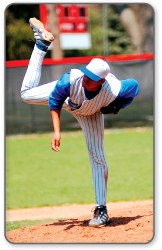
This condition is often referred to as Swimmer's shoulder, Pitcher's shoulder, Tennis Shoulder, or Shoulder impingement syndrome.

Rotator Cuff Instability

A muscle strength and flexibility imbalance or weakness, can cause instability and result in a subluxation or partial dislocation (your shoulder bones slide in and out of their sockets) or a full dislocation (the head of the arm bone slips out of the shoulder socket). These can cause a lot of pain and discomfort in your rotator cuff soft tissue. People with frequent dislocations often require surgery.

Success Stories

Shoulder instability which may have been present since birth or due to an injury, can also occur over time from overstraining, poor posture or inactivity. The rotator cuff is overworked, becomes weak and has difficulties stabilizing your shoulder, which in turn causes inflammation. If your rotator cuff becomes weak and tired, the head of your arm bone can squash up against the acromion and can result in a tear. This is often a major cause of rotator cuff tears in individuals over 40 years of age.

Rotator Cuff Strains or Tears

As you age, chronic degeneration can occur from repetitive motions breaking down the soft tissue and collagen (a fibrous connective tissue) in your rotator cuff. Degeneration may be caused by the development of calcium deposits, arthritic bone spurs or poor posture causing the acromion to rub on tendons or other soft tissue.
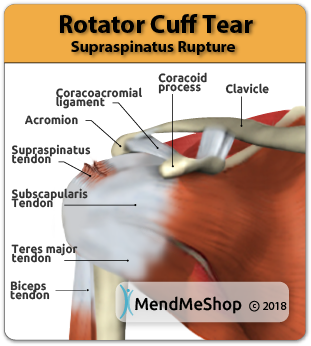
Chronic degeneration or a acute trauma can tear a rotator cuff tendon, usually the supraspinatus tendon.

Rough or repetitive arm movements, especially when your shoulder is lifted to the limit of its natural range of motion, can weaken the tendons already experiencing tendonitis. This can lead to a tear in your tendon or muscle that is often difficult to repair surgically. Imagine your favorite jeans wearing out; they get more and more worn until the edges fray or a hole appears.

A rotator cuff acute trauma results from a sudden injury such as falling onto an outstretched arm, which can bruise, strain or tear your rotator cuff tendon or muscle at any age. Excessive force exerted by lifting or pulling something too heavy, pushing off an object vigorously with your arm, or making a forceful and abrupt forward throwing or overhead action, can also severely damage and tear your rotator cuff.

Rotator cuff injuries can also happen in conjunction with other shoulder injuries such as a fracture.

Types of Rotator Cuff Tears

A partial thickness tear of your tendon or muscle is not torn all the way through. This is related to chronic inflammation or impingement which results from the development of spurs on the underside of the Acromion (often require surgery to remove the bone spur).

Success

A full thickness or complete tear is torn all the way through your tendon or muscle. This generally results from acute or sudden injuries, ongoing impingement, or degeneration of partial thickness tears.

A tendon torn from the bone often results from a traumatic injury or degeneration.

Rotator Cuff Scar Tissue

Scar tissue will often develop as a result of a major rotator cuff injury, tendinitis, shoulder instability and other rotator cuff injuries once acute inflammation begins to decrease. As your damaged shoulder tissues heal this dead, fibrotic tissue will develop instead of forming brand new tissue. This tissue adheres to your muscle fibers, tendons, ligaments, fascia, nerve cells and joints preventing them from moving properly and limiting your range of motion, flexibility and strength.

Scar tissue develops as damaged rotator cuff tissue heals. This can lead to re-injury or other painful conditions if left untreated.

The amount of scar tissue you develop will depend on the size, depth and location of your injury, as well as your age and current health. Leaving your scar tissue untreated may lead to future shoulder conditions and injuries such as, frozen shoulder, arthritis, tendon tears, or impingement due to a thickening of the tissue in the subacromial space.


Rotator Cuff Injury Facts:

The term "rotator cuff" refers to a group of four tendons that attach four shoulder muscles to the upper arm bone.


About 6 million people in the U.S. seek medical care each year for shoulder problems.


The shoulder joint has the widest range of motion of all joints in the body.


Ultrasound Therapy can speed rotator cuff injury recovery significantly.


Continual repetitive use of the injured rotator cuff will lead to a worse injury.


Although the rotator cuff can tear suddenly as a result of a serious injury, most rotator cuff problems develop over time.


Specialized Rotator Cuff Customer Service Advisor can help you with product selection.

pain relief and injury treatment with ultrasound therapy

Inferno Wrap Shoulder - an advanced treatment for shoulder injury and rotator cuff injury

Freezie Wrap Shoulder - efficient relief of swelling and pain from an active sprain, shoulder strain, whiplash, or tight upper back muscles

Inferno Wrap Arm for treatment of the forearm, biceps, triceps, and median and ulnar nerves

Freezie Wrap Arm for cold compression of the forearm, biceps, triceps, and median and ulnar nerves

Inferno Wrap Elbow for tennis elbow, epicondylitis, elbow strains and elbow sprain

Freezie Wrap Elbow for tennis elbow, epicondylitis, and elbow sprain to prevent surgery

TortoiseShellz Premium Upper Back Vest - relief for your sore upper back and neck pain due to overuse, strain and injury.

Contact one of our Mendmeshop Customer Service Advisors for any questions help with ordering and recommended treatment directions